































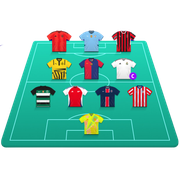

The best UCL Fantasy goalkeeper rotation pairs one keeper who plays on Tuesday with another who plays on Wednesday. Start the Tuesday goalkeeper, then switch to the Wednesday option only if the first score is poor. Different playing days matter more than simply owning two good keepers, because two same-day starters give you no second decision.
For Matchdays 5 to 7, I would usually spend €9.0m to €10.5m on the pair. The cheaper route should still buy two active starters. The premium route must offer a real upgrade in clean-sheet potential, saves or fixture quality, not just a famous name on the bench.
One warning changes the plan at the end of the league phase: every Matchday 8 fixture kicks off at the same time. There is no goalkeeper switch then, so the better single fixture and the safer starter become more important than playing-day coverage.
Prices, minutes, points and saves correct as of 07:32 GMT on Sunday 8 November 2026.
How goalkeeper rotation works in UCL Fantasy
UCL Fantasy lets managers make manual substitutions after one playing day has finished and before the next begins. That creates a simple goalkeeper sequence:
- Put the Tuesday goalkeeper in the starting XI.
- Leave the Wednesday goalkeeper on the bench.
- After Tuesday's matches, assess the first score.
- Keep the points or replace him with the Wednesday goalkeeper.
- Accept that the switch is final. You cannot restore the first score after confirming it.
The order is non-negotiable. You cannot bring in a goalkeeper who has already played, so starting the Wednesday option throws away the chance to use Tuesday's result first.
The same principle applies when a matchday uses more than two dates. Start the earliest goalkeeper and preserve the later one. The objective is not to predict the exact score twice. It is to buy a second roll when the first one disappoints.
Use the UCL Fantasy goalkeeper rotation planner to filter pairs by matchday range, total cost and separate playing dates. Check the complete fixture schedule before saving the team, because the Tuesday-Wednesday pattern can reverse from one matchday to the next.
My goalkeeper switch thresholds
Goalkeeper scoring is volatile. A clean sheet can turn a quiet night into six points, while saves can rescue a difficult fixture. That makes a rigid rule less useful than a score band.
My usual decision is:
- 0 to 2 points: switch. The second keeper has a realistic route to beating the score through appearance points alone.
- 3 points: usually switch. I would hold only if the Wednesday fixture is exceptionally poor or the second keeper's place is doubtful.
- 4 points: usually hold. Four is not exciting, but the replacement now needs a clean sheet, several saves or a bonus event to improve it.
- 5 or more points: hold. Protect the return. Chasing a marginal upgrade creates more downside than upside.
Context still matters. I am more willing to gamble away three points when the second keeper is at home to a weak attack. I am less willing when the replacement faces an elite side away. Red cards, penalties saved and late team news can also change the call.
The essential comparison is the undoubled goalkeeper score, because captaincy does not apply here. Do not chase a switch merely because the first keeper conceded once. A four-point return built on saves is still a useful score.
Three useful pair structures from Matchday 5
These are examples of different budget structures, not a fixed ranking. All six goalkeepers have played at least 315 of the first 360 league-phase minutes, but starting roles must still be checked before the Matchday 5 deadline.
David Raya and Yann Sommer: the premium-plus-value pair
David Raya (€6.0m) and Yann Sommer (€4.5m) cost €10.5m. Raya plays on Tuesday in MD5, while Sommer plays on Wednesday. The order reverses in MD6 and again gives separate dates in MD7.
Raya has 19 Fantasy points, two clean sheets and 13 saves from 360 minutes. Sommer has 18 points and 27 saves from 360 minutes. That is a useful contrast: Raya buys access to a stronger defence, while Sommer offers a save route when the clean sheet disappears.
I like the structure more than I like spending €6.0m without a plan. If paying the premium for Raya forces a weak outfield substitute, downgrade. If the rest of the squad is already balanced, the pair gives three consecutive matchdays with two decision points.
Josep Martínez and Maarten Vandevoordt: two €4.5m starters
Josep Martínez and Maarten Vandevoordt cost €9.0m together. Vandevoordt plays first on Tuesday in MD5, Martínez follows on Wednesday. They remain on opposite playing days in MD6 and MD7.
Both have completed all 360 league-phase minutes. Martínez has 18 Fantasy points, Vandevoordt 16, and each has made 17 saves. This is the balanced route: no premium keeper, no dead bench slot and €1.5m saved compared with Raya and Sommer.
The fixtures are not soft throughout the run, so this pair depends on saves as well as clean sheets. That is fine at €9.0m. The saving only becomes valuable when it improves a starting attacker, defender or captaincy option elsewhere.
Stas Pokatilov and Nikita Haikin: cheap, but not carefree
Stas Pokatilov and Nikita Haikin also cost €9.0m. Haikin plays on Tuesday in MD5 and Pokatilov on Wednesday. Their dates remain split across MD6 and MD7.
Pokatilov has 18 Fantasy points and 22 saves from 360 minutes. Haikin has 17 points and 17 saves from 315 minutes. The price and day coverage work, but the upcoming opponents make this a save-led pairing rather than a clean-sheet bet.
This is where cheap can become false economy. If both fixtures are difficult, the second chance may still have a low ceiling. I would use this structure only when the €1.5m saving over the premium pair completes a meaningful outfield upgrade.
Compare current goalkeeper prices and returns in the player rankings, then place the finalists side by side with Compare Players.
Bench order does not solve a bad goalkeeper plan
Outfield bench priority does not decide which goalkeeper replaces a non-player. The reserve goalkeeper is the only goalkeeper replacement. The important decisions are which keeper starts, whether the reserve plays later and whether you make any manual changes.
Automatic substitutions are also more fragile than many managers realise. If the starting goalkeeper does not play, the reserve can replace him only when the reserve has played and you have made no manual changes during that matchday. Changing captain, making a manual substitution or even saving a new bench order disables automatic substitutions for the rest of that matchday.
That does not mean manual changes are bad. They are one of the game's main advantages. It means you should not assume a late non-starter will be repaired automatically after you have already changed the team.
The practical rule is simple: use manual substitutions deliberately, and treat automatic substitutions as emergency protection rather than a strategy. The captain changes and manual substitutions guide explains the wider rule in detail.
When two active goalkeepers justify the money
Two reliable starters are worth paying for when all three statements are true:
- They play on different dates in most remaining matchdays.
- The second keeper has a credible route to beating a low first score.
- The extra spend does not weaken the starting outfield.
The second condition is the one managers miss. Opposite dates create the option, but fixture quality determines whether that option is useful. A cheap Wednesday goalkeeper away to a dominant attack may not be a genuine second chance.
I would avoid a premium-premium pair unless a Limitless chip removes the budget concern. Only one goalkeeper score can count. Money left on the bench must therefore create flexibility that is likely to be used.
At the other extreme, a €4.0m reserve with no secure role is not a bargain. It removes the rotation decision and can also leave the squad exposed to a late absence. A live €4.5m keeper is often worth the extra €0.5m because UCL Fantasy gives that bench slot an active job.
Matchday 8 needs a different approach
Every league-phase match on Matchday 8 begins simultaneously on Wednesday 27 January. There is no later goalkeeper to bring on. Pick the one starter with the better fixture, stronger clean-sheet route and safer place.
This reduces the value of a pair that was bought solely for opposite dates. It does not automatically justify a transfer, because goalkeeper moves rarely beat outfield upgrades. Plan the pair through MD7, then check whether one of the two already has an acceptable MD8 fixture.
The ideal rotation therefore does two jobs. It provides separate dates in MD5 to MD7 and leaves at least one credible starter for MD8. If it fails the second test, note the future transfer cost before buying.
The final goalkeeper rotation checklist
Before confirming a pair, ask:
- Do they play on different dates in MD5, MD6 and MD7?
- Which goalkeeper starts first in each matchday?
- Are both first-choice keepers?
- Does each have a route to points through clean sheets or saves?
- Is the total spend improving or damaging the starting XI?
- Which one has the better MD8 fixture when rotation disappears?
- What score will make me switch?
My default is two starters for €9.0m to €10.5m, opposite dates through MD7 and a pre-decided switch threshold. Start the earlier keeper, switch scores of two or fewer, judge three in context and protect four or more.
For a broader position shortlist, read the best UCL Fantasy goalkeepers guide. For the next deadline and fixture priorities, use the Matchday 5 first look.
Sources
Goalkeeper substitutions, manual changes and automatic-sub rules: UEFA's official UCL Fantasy rules for 2026/27. Manual substitution strategy: UEFA's official guide to making substitutions. Playing dates and fixtures: UEFA's official 2026/27 league-phase schedule.