































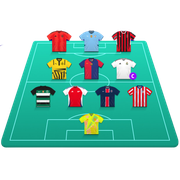
UCL Fantasy lets you build a squad from the players competing in the Champions League and score points from what they do in real matches.
The basic idea is familiar to anyone who has played fantasy football before. Pick a team, select a captain and climb your mini-leagues.
The crucial difference is what happens after the deadline. Most Champions League matchdays are split across more than one night, so you can replace poor scorers with substitutes who are yet to play. You can also move the captaincy to a later player.
That makes UCL Fantasy more interactive than a set-and-forget game. This beginner’s guide covers everything needed to enter the 2026/27 season with a competitive team.
What is UCL Fantasy?
UCL Fantasy is the official fantasy game for the UEFA Champions League.
Your players earn points from their real-life performances, including goals, assists, clean sheets, saves, ball recoveries and the official Player of the Match award.
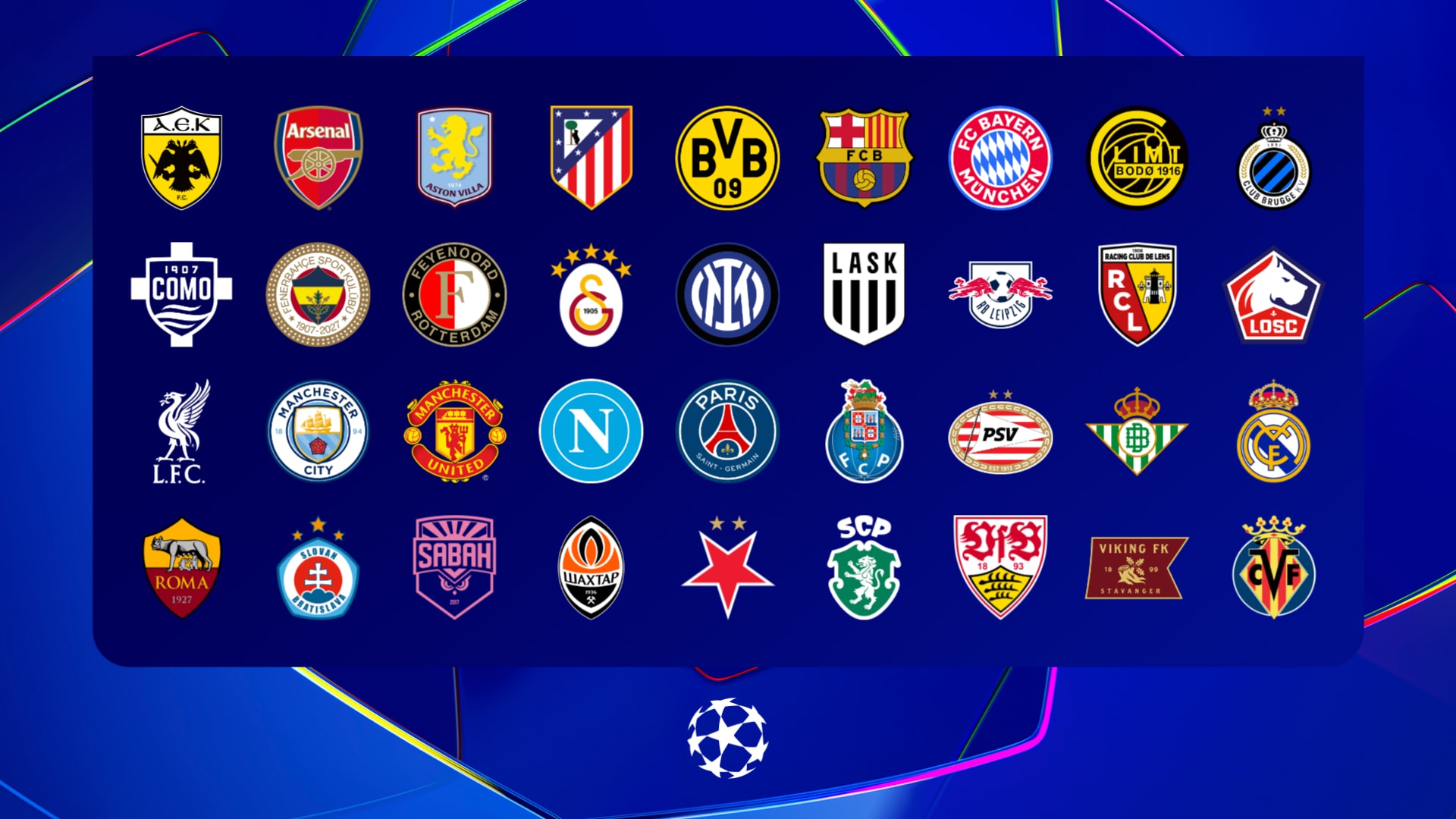
The 2026/27 competition contains 36 league-phase clubs. Each plays eight matches against eight different opponents. The top eight qualify directly for the round of 16, while teams finishing ninth to 24th enter a two-legged knockout phase play-off.
There are 17 fantasy matchdays in total:
- Eight league-phase matchdays
- Two knockout phase play-off legs
- Two round of 16 legs
- Two quarter-final legs
- Two semi-final legs
- The final
You can join at any point, although starting before Matchday 1 gives you the full season to accumulate points.
How to create your squad
Every manager selects 15 players:
| Position | Number required |
|---|---|
| Goalkeepers | 2 |
| Defenders | 5 |
| Midfielders | 5 |
| Forwards | 3 |
The starting budget is €100m. It increases to €105m after the league phase.
During the league phase, no more than three players can be selected from one club. The limit rises as the competition progresses and fewer teams remain.
Only 11 players finish each matchday in your scoring line-up, but the four substitutes are important because they can replace players who have already performed poorly.
How to choose a starting XI
Your XI must contain:
- One goalkeeper
- At least three defenders
- At least two midfielders
- At least one forward
You can use any legal formation, including 3-4-3, 3-5-2, 4-3-3, 4-4-2 or 5-3-2.
Unlike many fantasy games, the team that matters is the XI that finishes the matchday. You may begin in one formation and end in another after manual substitutions.
For example, a Tuesday defender can be removed for a Wednesday forward, provided the resulting team still has at least three defenders.
How UCL Fantasy points work
Players score in several ways.
Attacking points
- Goalkeeper goal: 6 points
- Defender goal: 6 points
- Midfielder goal: 5 points
- Forward goal: 4 points
- Assist: 3 points
- Goal from outside the box: 1 additional point
- Winning a penalty: 2 points
Defensive and appearance points
- Appearance: 1 point
- Reaching 60 minutes: 1 additional point
- Goalkeeper or defender clean sheet: 4 points
- Midfielder clean sheet: 1 point
- Every three goalkeeper saves: 1 point
- Penalty save: 5 points
- Every three ball recoveries: 1 point
- Official Player of the Match: 3 points
Points can also be lost for cards, own goals, missed penalties, conceding penalties and, for goalkeepers and defenders, every two goals conceded.
Ball recoveries are especially important. A centre-back can produce a useful return without a goal or clean sheet simply by winning possession repeatedly.
What does the captain do?
Your captain’s points are doubled.
The best feature is that you can change captain between matchday nights. If your Tuesday captain disappoints, you may move the armband to a Wednesday player whose match has not started. Matchday 1 lasts three nights, allowing another possible switch on Thursday.
Once a captain change has been saved, it cannot be reversed. The later player must beat the first captain’s raw score for the switch to improve your total.
A sensible squad contains at least one strong captain candidate on every night of action.
How manual substitutions work
After one day’s matches have finished, you can substitute up to four players before the next day begins.
The replacement must be on your bench and still waiting to play. The player you remove loses all points for that matchday, so the decision trades a known score for an uncertain one.
The standard strategy is:
- Start players whose teams play earliest.
- Put later players on the bench.
- Remove the lowest early scores.
- Bring in the best later options.
- Keep the formation legal.
- Save before the next kick-off.
You cannot bring in a player who has already played, undo a confirmed change or remove a player who received a red card.
Matchday 8 and the final are played in a single window, so there are no mid-matchday substitutions on those rounds.
Automatic substitutions versus manual changes
Automatic substitutions apply only when you make no manual changes during the matchday.
If a starter does not play, the game may bring in the highest-priority eligible substitute while preserving a legal formation. A non-playing goalkeeper may be replaced by the reserve keeper.
However, changing captain, making a manual substitution or even rearranging the bench disables automatic substitutions for that matchday.
That rule catches out new managers. Before making any manual move, check whether an absent starter might otherwise be replaced automatically.
How transfers work
Before Matchday 1, you can make unlimited transfers while staying within the budget.
During the league phase, you receive two free transfers before each matchday. Every additional transfer costs four points.
One unused league-phase transfer can be carried into the next round. You cannot build up a large bank over several weeks.
Unlimited transfers return at two major reset points:
- Before the knockout phase play-offs
- Before the round of 16
The allowances then change through the knockout rounds because elimination creates a greater need to replace players.
A transfer should solve a clear problem, such as injury, loss of minutes, a poor fixture run or a better captain opportunity. There is no need to use every free transfer simply because it is available.
What are the Wildcard and Limitless chips?
Each manager receives one Wildcard and one Limitless.
Wildcard
The Wildcard gives unlimited free transfers within the normal budget. The new squad remains after the matchday.
Use it when the overall structure of the team needs rebuilding.
Limitless
Limitless gives unlimited transfers with no budget restriction for one matchday. When the round ends, the previous squad returns.
Use it to attack a particularly strong set of fixtures with premium players.
Neither chip can be used on Matchdays 1, 9 or 11 because managers already receive unlimited transfers before those rounds.
A chip cannot be cancelled once saved, and using one prevents an unused free transfer from rolling forward.
When are the 2026/27 UCL Fantasy deadlines?
A team locks at the kick-off time of the first fixture in each matchday.
The league-phase deadlines are:
| Matchday | Deadline date |
|---|---|
| Matchday 1 | Tuesday 8 September 2026 |
| Matchday 2 | Tuesday 13 October 2026 |
| Matchday 3 | Tuesday 20 October 2026 |
| Matchday 4 | Tuesday 3 November 2026 |
| Matchday 5 | Tuesday 24 November 2026 |
| Matchday 6 | Tuesday 8 December 2026 |
| Matchday 7 | Tuesday 19 January 2027 |
| Matchday 8 | Wednesday 27 January 2027 |
Matchday 1 runs across 8 to 10 September. All 18 Matchday 8 fixtures are played simultaneously on 27 January.
Save changes before the first kick-off. Editing the team without confirming it is not enough.
Selected 2026/27 player prices
The premium end of the opening price list includes:
| Player | Club | Price |
|---|---|---|
| Kylian Mbappé | Real Madrid | €11.0m |
| Harry Kane | Bayern München | €11.0m |
| Erling Haaland | Manchester City | €11.0m |
| Khvicha Kvaratskhelia | Paris Saint-Germain | €10.0m |
| Julián Alvarez | Atlético de Madrid | €10.0m |
| Lamine Yamal | Barcelona | €10.0m |
| Ousmane Dembélé | Paris Saint-Germain | €10.0m |
| Vinícius Júnior | Real Madrid | €9.5m |
| Lautaro Martínez | Inter | €9.5m |
| Bruno Fernandes | Manchester United | €9.0m |
| Michael Olise | Bayern München | €9.0m |
| Victor Osimhen | Galatasaray | €8.0m |
| Dominik Szoboszlai | Liverpool | €7.0m |
| David Raya | Arsenal | €6.0m |
| Nuno Mendes | Paris Saint-Germain | €6.0m |
| Gabriel | Arsenal | €6.0m |
Do not begin by trying to own every premium. Begin with the players you might captain, then use the remaining budget to build 15 reliable starters.
How mini-leagues work
You can create a private league and invite friends using a league code.
Every team is also entered automatically into public leaderboards, including:
- The overall world league
- A league for managers from the same country
- A league for supporters of the same Champions League club
Mini-leagues are often the best way to stay engaged throughout the season, especially when overall rank feels distant.
What prizes are available in 2026/27?
The overall winner is due to receive a trip for two to the 2028 Champions League final, including flights and accommodation, plus a PlayStation 5.
There are also prizes for second and third overall, the leading manager in the league phase, the leading manager across the knockout phase and the highest scorer in each matchday except the final.
Prizes are subject to the official eligibility rules and terms, so check those before assuming a particular award is available in your territory.
A simple first-team strategy
A new manager does not need a complicated model. Start with six principles.
1. Pick 15 expected starters
A non-playing substitute removes one of your chances to repair the team during a matchday.
2. Spread the squad across the fixture days
Start early players and bench later ones. Select goalkeepers who play on different nights.
3. Buy at least one captain per night
The ability to change captain is valuable only when a strong alternative remains.
4. Look for several routes to points
Penalties, set pieces, ball recoveries, attacking roles and clean-sheet potential all matter.
5. Plan for several fixtures
You receive two free transfers per league-phase round, not an unlimited rebuild every week.
6. Check confirmed line-ups
Official line-ups for the first matches are normally available before the deadline. Use them to remove avoidable rotation risk.
Common beginner mistakes
Copying a domestic fantasy strategy exactly
UCL Fantasy has manual substitutions, captain switches, recoveries and a different chip system. It rewards active management.
Putting the strongest players straight into the XI
The fixture day matters. A brilliant Thursday player may be more valuable on the bench because they can replace a Tuesday blank.
Choosing one goalkeeper who never plays
Both keeper slots can score through manual substitutions.
Forgetting to save
Changes must be confirmed before the relevant kick-off.
Taking hits too quickly
An extra transfer costs four points. Compare that cost with the likely gain across more than one matchday.
Moving captain after a strong score
The new captain must beat the original player’s raw points. Do not risk a secure haul simply because another famous name plays later.
Making a manual change without checking auto-subs
Any intervention disables automatic substitutions for the rest of the matchday.
UCL Fantasy beginner FAQs
Is UCL Fantasy free to play?
The official game is free to enter. Account and eligibility requirements still apply.
Can I change my team after the deadline?
You cannot transfer players after the matchday begins, but you can make manual substitutions and switch captain between matchday nights, provided the incoming player has not played.
Do bench points count automatically?
Only the 11 players who finish the matchday in your team score. Bench players count if you manually bring them in or if an eligible automatic substitution occurs.
Can I change formation?
Yes. Manual substitutions can change the formation as long as the final XI contains one goalkeeper, at least three defenders, two midfielders and one forward.
Can I join after Matchday 1?
Yes. A team created between rounds begins scoring from the next matchday. A team created after one day of a multi-day matchday can begin scoring from the next day.
Do prices change?
Prices remain fixed through the Matchday 2 deadline. From Matchday 3 onwards, some values can rise or fall according to performance.
The UCLFantasy.com verdict
UCL Fantasy is easy to enter but rewards managers who understand the matchday structure.
Pick a balanced 15, start the earliest players, keep strong later options on the bench and build a captain ladder across the nights. Once the football begins, protect good scores and use substitutions to attack the weak ones.
That is the central skill of the game. You are not trying to produce one perfect line-up before Tuesday. You are building a squad that can improve itself as the Champions League week unfolds.