































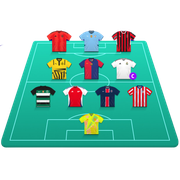

Khvicha Kvaratskhelia is my favourite premium midfielder at €10.0m. Ten goals, six assists and 121 Fantasy points in the 2025/26 Champions League is not subtle evidence. The price hurts, but the role and captaincy ceiling justify it.
Lamine Yamal and Khvicha Kvaratskhelia are €10.0m, Vinícius Júnior and Raphinha €9.5m, and Bruno Fernandes and Michael Olise €9.0m for 2026/27. Midfield is the deepest position, but depth creates difficult trade-offs rather than an automatic need to spread funds evenly.
Prioritise repeatable involvement
Minutes, centrality, set pieces and penalty responsibility are more reliable than one spectacular pre-season result. Start by asking where a player receives the ball and how often the role leads to shots or final passes. A wide label can hide a player who attacks the box constantly, while an advanced reputation can hide someone now asked to build play deeper.
Midfielders also have multiple scoring routes through goals, assists, clean sheets, recoveries and player-of-the-match awards. Compare the whole profile. An option with moderate attacking output but secure minutes and recoveries may outscore a rotation-prone winger over a three-game run.
Set pieces change the floor
Corners and free-kicks add repeatable assist opportunities. Penalties add a high-value route to goals, but responsibility should be verified rather than assumed from last season. Transfers, tactical changes and shared duties can all alter the hierarchy.
Set pieces are most valuable when combined with open-play involvement. Paying a premium solely for occasional corners can be inefficient if the player is otherwise peripheral.
Keep the structure flexible
Two useful price points are often better than concentrating the entire budget in one corner. A premium anchor can offer captaincy, while mid-price players preserve routes to emerging options. Avoid a midfield where changing one selection requires weakening two other positions.
At least four of the five should have credible starts because manual substitutions make bench quality useful. If a cheap fifth midfielder is unlikely to play, calculate whether the saving genuinely improves the starting XI enough to compensate.
Use fixtures by role
A favourable opponent helps creators and scorers differently. Teams defending deep may concede set pieces but restrict transition space. Stronger opponents may leave room behind. Look beyond the overall difficulty colour and ask whether the expected match suits the player's actual route to points.
Playing days also matter. Matchday 1 spans three days, allowing an early midfielder's score to be assessed before later options play. Captaincy candidates across multiple days can be valuable, but quality and minutes remain the first tests.
How to build the shortlist
Create separate lists for premium captains, mid-price attackers, recovery-led starters and budget enablers. Compare within a role and price band before combining the final five. This produces a coherent midfield instead of a list of individually appealing names.
Inspect current prices in Player Rankings, compare candidates in Compare Players and check schedules in Fixtures. Select for points and flexibility first. Popularity should never rescue a weak football argument.